Showing posts with label meaning. Show all posts

Saturday, May 18, 2013

Divination 101 - Runes


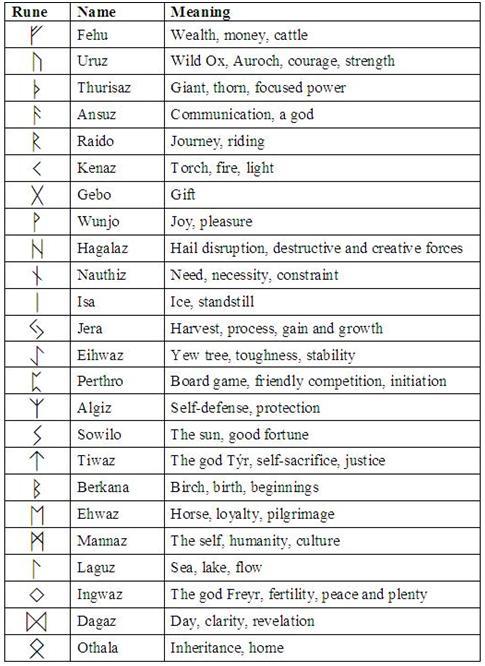
I will make this very sweet and simple for all of you, since I don't have very much time right now (end of the school year finals!). Runes are basically symbols on stones, and they are also a way of telling the future. I have never used these before, but hopefully I will be able to, but I will give you the symbols, their meanings and there is a video to back it up, but it isn't showing up, so I will give you guys the website and hopefully you all enjoy! (And the reversed meanings for below is just the opposite of what they mean).


http://www.youtube.com/watch?v=qGAhUPecwBY

Monday, May 13, 2013

Divination 101 - Scrying


Scrying is the art of gazing into an object in order to see with the mind what the eyes cannot. You may have had experience with this before. Anyone who has ever been camping knows the strange deisre to sit staring into the fire at night. There is just something there that seems to awaken something within our mind. Scrying can be performed with crystals, gazing into mirrors or with bowls of water.

When using a crystal ball, it must be absolutely perfect. It cannot have bubbles, scratches, cracks, or any other flaws that will distract you from your work. Always lay your ball out on a soft black cloth (the best being black velvet since velvet catches no light). As you work, move any light source so that it cannot be reflected in the ball. This will affect your ability to concentrate and see what you need to. Flickering candle flames can be very distracting when you need to pay attention to your divination. Gaze into the crystal and keep your mind as blank as you can.


You will not be able to work if you are affected by stress or tension so try to rid yourself of the day's activities before you begin. Gaze naturally into the crystal and allow your mind to rest. Do not imagine anything inside of the crystal. It may take a very long time when you are first beginning but after a while you will see the ball seem to fill with a fine white mist. Gradually, it will grow thicker and thicker until the crystal seems full of smoke. This will fade shortly, leaving you with a picture.


This picture may be from the past, present, or future, but it is most likely to be symbolic, not literate. You will probably need to look up the meaning if it is a symbol or an animal. Try to determine the meaning of what you see, but do not allow yourself to see what you want to see. This practice can also be accomplished by staring into a black bowl full of water or gazing into a scrying mirror. Scrying mirrors are like regular mirrors except that they are black and obviously not for seeing your reflection.


Saturday, May 11, 2013

Divination 101 - Pendulums

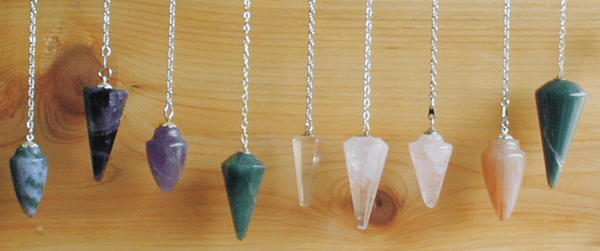
Congradulations! We have completed the first part of the first lesson! Yay, yeah, woot! Awesome, so now we can continue on to part 2 of this lesson of divination tools: the pendulum. Pendulums are wonderful tools for reading the psyche (basicually meaning used to tap into psychic centers and see what we know). Though it appears to be the pendulum swinging on its own, it is really our subconscious moving the pendulum. Something to help practice is this simple exercise:


Begin by finding a pendulum. (Most pendulums are made from metal chains, pendants and gemstones for weights, or something that means something to us). An example would be that my pendulum is my Ankh necklace. A fancy pendulum isn't necessary, any object dangling from a string will work. (If you decide that you like using the pendulum and would like an expensive one, a weight made from a quartz crystal or tiger eyes is probably best).

Next, make a direction card. Cut a square out of a piece of paper or card. Then, in the center, draw a circle. There will be one line going from left to right and another going up and down. Label the horizontal line "No" and the verticle "Yes" while the circle represens "Maybe".

Now, hold the pedulum over the circle by the string from your power hand (your left hand is your magic hand!). Hold it so it dangles about an inch off of the paper. Then swing the pendulum side to side saying "This means yes" and stop the pendulum. Then back and forth saying "This means no" and stop the pendulum. Then swing it in a circle saying "This means maybe". Now for the real exercise.

Hold the pendulum over the paper while you rest your elbow on the table. Say: "Show me yes". Do not try to swing the pendulum. Watch as it begins, very slowly, to swing back and forth. Stop the pendulum. Say: "Show me now". Watch as it swings from side to side. Stop the pendulum. Say: "Show me maybe". Stop the pendulum after it has gone it a circle. After you have successfully tried this exercise, you can begin asking questions. Begin with questions you know the answer to, like the name of your dog, or if your favorite color is blah blah blah. Then try some questions you don't know the answer to, like if you'll get an A on your Final, or if Mr/Miss Hotty Hot Hotty likes you. You get the point? But make sure that you record the question(s) and the pendulum's response. Was the answer what you thought it would be? Record your answer.

Here is something for you to watch out for: if you think of an answer or wich for an answer before the pendulum gives it to you, then the pendulum may reflect that answer. Before you ask, completely clear your mind. Don't allow any of your desired thoughts to get through or they may affect your question. also, be sure to watch the pendulum for longer than a few seconds. The way it begins swinging will likely change so wait for it to hit a path and stay there.

ADVANCED LEARNING: PENDULUMS AND MAPS
An advanced way of using pendulums is over a map. This practice can be used to find a person, water, minerals, etc. All you need for this is a map of the area and a pendulum. Hold the pendulum over the map. Let the pendulum swing as you think of what you are looking for. If it is a person, hold a piece of their hair, fingernail, or an item of their clothing in the same hand that holds the pendulum (which should be your powerful hand). Move the pendulum over the map.

Some people have different ways of reading the pendulum. You should learn the way that works best for you. In one case, the pendulum will swing in a "Yes" motion  when it travels over the are of what you are searching for. In another instance, some say that the pendulum will swing in tighter and tighter circles the closer you get. Whichever method you use, you will have to move the pendulum very slowly over the map. This also works for finding water and minerals on a piece of property. You can just walk around with the pendulum to find what you need beneath the ground.

Well, good luck and I hope that this does not fail you. If it isn't what you are looking for, don't worry! There are two more parts to this lesson if you choose to follow the path of divination. If all else fails, don't beat yourself up or the craft, because you were just meant for a different path. Blessed be.


Friday, May 3, 2013

Divination 101 - The Tarot Deck Continued

Finding the Reversed Tarot Card Meanings.
This is an article I found that should help to explain how to read reversed Tarot Cards. If this does not fully explain, simply just comment and I'll try my best to help. Sorry this was short and simple, but my life has gotten busy at the moment. Good luck everyone!
Information for this post came from the website http://tarotelements.com/6649/using-reversed-tarot-cards/


The Secret to Using Reversed Tarot Cards for Empowering Readings.
“Reversed Tarot cards?! Ugh, I would never use those. They’re so negative!”
I was having what was, up until this point, a pleasant conversation with a group of Tarot enthusiasts about interpreting the Tarot cards. The conversation drifted towards the topic of reversed Tarot cards and suddenly the mood changed. “Reversed Tarot cards?!” I looked around the group and there was a look of shock, horror and dismay at the mere suggestion of using reversed Tarot cards in a reading. “Ugh, I would never use those. They’re so negative!”
What?! I was taken aback by such a passionate response from my colleagues. As someone who has used reversed Tarot cards in readings for more than 10 years, had I been providing such negative readings to my clients? I didn’t think so. I have always been so focused on empowering the client, rather than creating unnecessary worrying. So what made my interpretations of reversed Tarot cards different?
I started thinking… do we really know how to use reversed Tarot cards to their full potential, to empower the client and create a positive path forward? What’s the secret?!

Why Use Reversed Tarot Cards in the First Place?

You might think that with 78 Tarot cards in a typical deck, surely there’s enough depth and meaning in those cards to conduct an accurate and insightful Tarot reading. True.
But what if you could double it to 156 Tarot cards? Perhaps you could even double your Tarot insight? This is the power of reversed Tarot cards.
What I love most about using reversed Tarot cards is that it offers a multi-dimensional view. We start to see the light and shade, highs and lows, yin and yang of each card. We begin to understand that the energy of each card ebbs and flows, increases and decreases, and can be released or blocked.
This, to me, is a reflection of life itself. Nothing is ever in the one state of ‘being’. Instead, there is impermanence and the knowledge that life is on a continual cycle from one state to another. Using reversed Tarot cards helps to identify these cycles and locate where the client is on their journey.

Do Reversed Tarot Cards Really Have to be so Negative?

Unfortunately, there are many interpretations of Tarot cards in the reversed or ‘ill-dignified’ position that are indeed negative. Take, for example, the traditional meaning of the Three of Wands reversed. “Ulterior motives. Distrust, treachery, deceit. Interrupted by misfortune” (cited in Mary Greer’s book “The Complete Book of Tarot Reversals”, p.103). With these types of interpretations, it is little wonder that so many people are put off by reversed Tarot cards.
But do reversals really have to be that negative?
I think not. In fact, I am a strong believer that using reversed Tarot cards in readings can be empowering and insightful. When we understand the multiple dimensions that reversed Tarot cards bring to a reading, we can begin to use these insights to help the client release any blockages, avoid any dangers, address any challenges and maximise opportunities. It all comes down to how the reversed cards are interpreted.

5 Ways to Interpret Reversed Tarot Cards… And Empower Your Clients

So, what is the secret to using reversed Tarot cards for empowering readings?
Here are five ways to interpret reversed Tarot cards in your readings so that you can empower your client and avoid the ‘doom and gloom’ that is so often associated with reversals.
(NOTE: There are many other ways in which the reversed Tarot cards can be interpreted (such as a ‘no’ to a question, the opposite of the upright card and delays – read more at http://www.biddytarot.com/blog/how-to-interpret-reversed-tarot-cards). I have chosen to focus on the methods below to illustrate how reversed cards can be used to empower clients and create a positive, helpful and practical reading.)
1. Releasing blocked energy
Reversals often signify that the energy of the card is currently blocked or repressed. If you can identify where a blockage exists, then you can also identify how to remove the blockage. Focus on manifesting the free-flowing energy of the card. Look to other cards in the reading or draw a clarifying card to understand what action needs to be taken to release the blockage.
2. Mastering the lesson of the previous card
In his book “Mastering The Tarot”, Paul Fenton-Smith suggests that a reversed Tarot card implies a need to return to the previous card. There is an important life lesson that has not yet been mastered or completely understood, and therefore the client is advised to reflect on this card’s energy to improve current circumstances. For example, if you drew the reversed Two of Pentacles and were facing financial disorganisation, you need to return to the Ace of Pentacles so that you can prioritise your financial goals and set yourself a budget.
Personally, this is one of my favourite methods as it offers hope and a clear path forward.
3. Identifying unconscious awareness
Sometimes, reversed Tarot cards can reflect that the energy of the card remains in the unconscious mind and has not yet been revealed to the client. The beauty of seeing this in a reading is that it is brought into the client’s conscious awareness. The client is then given the opportunity to address the issue or maximise the opportunity.
4. Clearing negative energy
Another way of interpreting reversed cards is that the energy of the upright card is either increased or decreased. For example, the Ten of Swords signifies a painful ending and betrayal. When reversed, the energy may be weakened, indicating that a difficult period is over and the client can begin to heal. This can be a positive message in itself and is encouraging for the client who may have been suffering.
5. Identifying potential challenges
Often, reversed cards indicate obstacles or challenges that stand in the way of the client’s ability to achieve their desired outcomes. While we don’t always like to hear about challenges, the advantage is that it can act like a warning system ahead of time. It provides the opportunity for the client to consider where they are going off course or why these challenges are being encountered, and then put in place necessary actions to get back on course.

Putting it Into Practice

Let’s see how this works with a real life reading. Being a mother of a 9 week old and a 2 year old, I asked the cards what I need to know about managing my family. I drew Temperance reversed.
The traditional meaning is, “Competition. Impatience. Frustration.” Uh, ok. Thanks. That’s a no-brainer!
Instead, I am going to use some of the methods outlined above to create what I believe is a more empowering reading.

We know that Temperance is about patience, balance and moderation. Reversed, this card indicates blockages to accessing this energy, or perhaps the qualities of Temperance are already within me (i.e. an unconscious awareness). To help bring a state of peace and calm to my family life, I therefore need to focus on creating balance and moderation and allowing that energy to flow naturally in my day-to-day activities. (I just started meditation classes, so that’s a step in the right direction.)
And perhaps I need to return to the lesson of the previous card, Death, and acknowledge that I am in the midst of a major life change right now. By acknowledging that a major change is taking place, I can become more accepting of my current circumstances. This in turn creates patience and moderation in my approach.
Of course, I could go on. However, it should be apparent that by using even just a handful of these simple interpretation methods it is possible to create an empowering reading that clearly identifies what actions need to be taken to rectify the situation.
So much for reversed Tarot cards only being negative!!
A Final Word
Sure, reversed Tarot cards can be portrayed as ‘negative’. But I encourage you to look beyond these simplistic and often negative interpretations, and challenge yourself to find the positive element in reversed Tarot cards. Go into your reading with the intent of empowering your client and you will find that the reversed Tarot cards enable you to do this in ways that often the upright cards cannot. Draw upon the methods I have suggested, and even create your own. This is the secret to using reversed Tarot cards for empowering readings!
Brigit

Wednesday, May 1, 2013

Divination 101 - The Tarot Deck Continued


This post is to explain what the cards' meanings are in a simple form.. The deck that I had chosen for myself almost a year ago now is the Shadowscapes Tarot by Stephanie Pui-Mun Law. She is an amazing watercolor artist and I enjoy her art, it has inspired me artistically and spiritually. When you choose your deck, it doesn't have to be only ONE, you can have multiple decks, but I recommend trying to create a connection between you and your deck(s). An impression if you will. Each card is a door that can open up many other worlds, your very own portal. Like two strangers catching each other's eyes across a room in a glance of just the briefest of moments that holds many possibilities, that should be you and your deck(s).

Now, close your eyes and pick one card and just look at the picture, study it, drink in the picture and it's meaning. Look at it for so long that you can see it with your eyes closed. Step into the image. Imagine how it feels, how it smells, how it sounds. This is both the hardest and the easiest part of reading the cards: to simply look at a picture and say what it means is something we have lost when we grew away from our childhood, but adults struggle with it, thinking they'll "get it wrong". Do not worry about this, because this connection is based off of the emotional and spiritual. Nothing can go wrong there!

Now, the second hard part to the deck: memorizing what each card means. I imagine it takes many years or the most simplest of time, either way it is NOT a necessity  but it is nice to just know what the cards mean off the top of your head. Here are the meanings:


The Major Arcana
The FoolUpright: New beginnings, new adventures, new opportunities, unlimited possibilities, pleasure, passion, thoughtlessness, rashnessReverse: A bad decision, indecision, apathy, hesitation, a faulty choice
The MagicianUpright: Originality, creativity, skill, will-power, self confidence, dexterity, sleight of handReverse: Weakness in will, insecurity, delay, no imagination
The High PriestessUpright: Wisdom, knowledge, learning, intuition, purity, virtue, a lack of patience, a teacherReverse: Ignorance, lack of understanding, selfishness, shallowness
The EmpressUpright: Action, development, accomplishment, mother/sister/wife, evolutionReverse: Vacillation, inaction, lack on concentration, indecision, anxiety, infidelity
The EmperorUpright: Accomplishment, confidence, wealth, stability, leadership, father/brother/husband, achievement, a capable personReverse: Immaturity, indecision, feebleness, petty emotions, lack of strength
The HierophantUpright: A need to conform, social approval, bonded to the conventions of societyReverse: Unconventionality, unorthodoxy, an inventor
or
Upright: Mercy, kindness, forgiveness, compassion, conformity, a sense of historical importance, inspiration
Reverse: Foolish generosity, errors are repeated, impotence, vulnerability, frailty, unorthodoxy
The LoversUpright: Love, harmony, trust, honor, the beginning of a romance, optimism, a meaningful relationship/affairReverse: Unreliability, separation, frustration in love, fickleness, untrustworthy
The ChariotUpright: Perseverance, a journey, a rushed decision, adversity, turmoil, vengeanceReverse: Unsuccessful, defeat, failure, last minute loss, vanquishment
StrengthUpright: Strength, courage, conviction, energy, determination, action, heroism, virilityReverse: Weakness, pettiness, sickness, tyranny, lack of faith, abuse of power
The HermitUpright: Counsel, inner strength, prudence, caution, vigilance, patience, withdrawal, annulment, a lonerReverse: Imprudence, hastiness, rashness, foolish acts, immaturity
The Wheel of FortuneUpright: Destiny, fortune, a special gain, an unusual loss, end of a problem, unexpected events, advancement, progressReverse: Failure, bad luck, interruption, outside influences, bad fate, unexpected events
JusticeUpright: Harmony, balance, equality, righteousness, virtue, honor, advice, a considerate personReverse: Bias, false accusations, intolerance, unfairness, abuse
The Hanged ManUpright: Suspension, change, reversal, boredom, abandonment, sacrifice, readjustment, improvement, rebirthReverse: Unwillingness to make an effort, false prophecy, useless sacrifice
DeathUpright: Transformation, making way for the new, unexpected change, loss, failure, illness or death, bad luckReverse: Stagnation, immobility, slow changes, a narrow escape, cheating death
TemperanceUpright: Moderation, temperance, patience, harmony, fusion, good influence, confidenceReverse: Discord, conflict, disunion, hostility, frustration, impatience
The DevilUpright: Ravage, weird or strange experience, downfall, unexpected failure, controversy, violence, disaster, an ill-tempered personReverse: Divorce, release, handicaps are overcome, enlightenment
The TowerUpright: A sudden change, abandonment of past, ending a friendship, unexpected events, disruption, bankruptcy, downfall, loss of money or securityReverse: Following old ways, a rut, entrapment, caught in a bad situation, imprisonment
The StarUpright: Hope, faith, inspiration, optimism, insight, spiritual love, pleasure, balanceReverse: Unfulfilled hopes, disappointment, dreams are crushed, bad luck, imbalance
The MoonUpright: Deception, trickery, disillusionment, error, danger, disgrace, double-dealingReverse: Deception is discovered before damage can be done, trifling mistakes, taking advantage of someone
The SunUpright: Satisfaction, accomplishment, success, love, joy, engagement or a happy marriageReverse: Unhappiness, loneliness, canceled plans, broken engagement or marriage, a clouded future, a lack of friends
Judgmentor
Rejuvenation
Upright: Awakening, renewal, a well lived life, better health, a quickened mindReverse: Fear of death, failure, possible loss, ill health
or
Upright: Atonement, judgment, the need to forgive, rejuvenation, rebirth, improvement, development, promotion, efforts are rewarded
Reverse: Delay, disappointment, indecision, procrastination, theft, worry
The WorldUpright: Completion, perfection, recognition, honors, the end result, success, fulfillment, triumph, eternal lifeReverse: Imperfection, lack of vision, disappointment


The Minor Arcana
WandsUsually predict energy, growth, enterprise, animation, and glory.
Ace of wandsUpright: A creative beginning, a new business venture, a profitable journey, an inheritance, a new career, a birth in the familyReversed: Selfishness may spoil the venture, setbacks for a new enterprise, a journey may be put off, a lack of determination
Two of WandsUpright: A kind and generous person, an interest in science, patience, creative ability, courage, good things to comeReversed: Caution is advised against impatience, a possible domination by others
Three of WandsUpright: A cooperation in business affairs, trade and commerce, success brought by a good partnership, practical help may come from a successful personReversed: A tendency to scatter energies, mistakes are made through carelessness, disappointment, caution against pride and arrogance
Four of WandsUpright: The beauty of the harvest home, perfected work, prosperity, peace, celebration after labor, end of romance in marriage, happy holidays to comeReversed: Learning to appreciate the little things in life, beauty of nature, peace, harmony
Five of WandsUpright: Competition, possibility of a lawsuit or quarrel, obstacles, courageReversed: Harmony, new opportunities, generosity
Six of WandsUpright: Good news, victory, success after labor, helpful friends, leadership during journeyReversed: Rewards are delayed, postponed trip, bad news, an insolent winner, pride in riches/success
Seven of WandsUpright: The ability to "hold one's own" against adversaries, stiff competition in business, a fight won, a fight one may have to face soon, victory, energy, courageReversed: The threat will pass by, don't let others take advantage, caution against indecision, patience
Eight of WandsUpright: A Goal is approaching, new ideas, a journey by air, love will find its mark, love of open air, gardens, meadowsReversed: Jealousy, violence, quarrels, domestic disputes, a force of courage or boldness is applied to suddenly
Nine of WandsUpright: Preparedness, eventual victory, good health, strength in reserve, tendency to obstinacyReversed: Unpreparedness, refusal to fight, weakness in character, ill health, bending over adversity
Ten of WandsUpright: An oppressive load, pain, all plans or projects ruined, complete failureReversed: Strength, energy, a desire to ruin the happiness of others, a clever person
Page of WandsUpright: Brilliance, courage, beauty, sudden anger or love, great enthusiasm, a messengerReversed: Superficial, theatrical, unstable, a broken heart, bad news to come
Knight of WandsUpright: An impetuous nature, generous friend, a lover, haste, a journey, the coming or going of a matter is of much concernReversed: Discord, work interrupted, jealousy, narrow-mindedness, suspicion, the journey is delayed
Queen of WandsUpright: A woman, fondness of nature or of the home, attraction, command, someone who is well liked or honorableReversed: Strict, domineering, a jealous and revengeful nature, deceit, infidelity
King of WandsUpright: A gentlemen, father, passionate, generous, noble, a good leaderReversed: Severe, unyielding, strict, intolerance, prejudice, quarrels
CupsUsually predict love, happiness, fertility, and beauty.
Ace of CupsUpright: The beginning of love, joy, beauty, or good healthReverse: Hesitancy to accept the things that come from the heart, love under a selfish grasp, egotism
Two of CupsUpright: A new romance, a well balanced friendship is beginning, harmony, cooperationReverse: A loss of balance in a relationship, a violent passion, love turning bad, a misunderstanding
Three of CupsUpright: A good fortune in love, a happy conclusion, unknown talents are discovered, a sensitive and sympathetic person, hospitalityReverse: Pain, gossip, unknown talents remain hidden, overindulgence
Four of CupsUpright: Reevaluation, a dissatisfaction with success, kindness may come from othersReverse: New relationships possible, new goals, new ambitions, action
Five of CupsUpright: Sorrow, loss of a loved one, a broken marriage, disillusionment, vain regretReversed: Return of hope, new relationships are beginning, return of a loved one, courage is summoned from within
Six of CupsUpright: A gift from a childhood acquaintance, happiness and pleasure brought from the past, good memories, a new friendship, a gift from an admirer, new opportunitiesReverse: Living in the past, outworn friendships, disappointment
Seven of CupsUpright: A long-worked imagination, unable to choose one's direction in life, illusory successReverse: A good use of determination, will-power, a definite path will be chosen
Eight of CupsUpright: An abandonment of one's current path in life, disappointment in love, misery and repining without cause, desire to leave on'e success for something higherReverse: Search for pleasure, seeking joy or success, a new love interest
Nine of CupsUpright: An assured future, physical well-being, a wish may come trueReverse: A lack in money, overindulgence, illness, a wish may not come true
Ten of CupsUpright: A happy family life, true friendships, lasting happinessReverse: A family quarrel, loss of a friendship, children may turn against their parents, waste
Page of CupsUpright: Gentleness, sweetness, kindness, an interest in poetry or art, newsReverse: Selfishness, little desire to create, a poor imagination
Knight of CupsUpright: Intelligence, romantic dreamer, the coming or going of an emotional matterReverse: Trickery, fraud, sensuality, idleness, an untruthful person
Queen of CupsUpright: Imagination out-ways one's common sense, a good wife or loving mother, happiness, gentle, a good natured personReverse: An over-active imagination, perverse, pleasure and happiness may turn bitter
King of CupsUpright: A business man, a man of law, kindness, a considerate person, a willingness to take on responsibility, and enjoyment of the arts or sciencesReverse: A powerful man but a double-dealer, crafty, violent, scandal
SwordsUsually predict aggression, force, ambition, courage, strife, misfortune
Ace of SwordsUpright: Beginning of a victory, ability to love and hate with ardor, a valiant leader may be bornReverse: Caution when trying to use power to gain an ending, obstacles, tyranny
Two of SwordsUpright: Well balanced emotions are needed, indecision, trouble ahead, in need of directionReverse: Release, beware when dealing with the unscrupulous
Three of SwordsUpright: Affections may experience "stormy weather", lovers separated, possible civil warReverse: Disorder, confusion, loss, sorrow due to loss
Four of SwordsUpright: Rest after strife, retreat, temporary exile, a change back to the "active life"Reverse: Renewed activity, social unrest, labor strikes
Five of SwordsUpright: Failure, defeat, cowardliness, cruelty, an empty victoryReverse: A lesser chance of loss or defeat, an empty victory, unfairness in dealings
Six of SwordsUpright: A journey, passage away from sorrow, harmony will prevailReverse: Journey will be postponed, no way out of present obstacles or difficulties
Seven of SwordsUpright: An unwise attempt, unreliability, betrayal, insolence, spying, possible failureReverse: Excessive help is given, good advice, counsel, stolen items are returned
Eight of SwordsUpright: Restricted action, indecision, censure, temporary illness, weakness, a prisonerReverse: Relaxation, new beginnings possible, freedom
Nine of SwordsUpright: Suffering, doubt, desolation, illness, injury, death of a loved one, suspicion, cruelty, misery, loss, dishonesty, pitilessness, slanderReverse: Healing over time, unselfishness, patience, good news of a loved one
Ten of SwordsUpright: Sudden misfortune, ruin of plans, defeat, failure, pain and tearsReverse: Evil forces are overthrown, courage, some success, better health
Page of SwordsUpright: Dexterity, grace, diplomacy, understanding, an upsetting messageReverse: A cunning person, an imposture, ill health, unexpected events
Knight of SwordsUpright: A headlong rush into life, a strong man, bravery, a skillful and clever person, an unexpected coming or going of a matterReverse: Tyranny, a troublemaker, a crafty and secretive person
Queen of SwordsUpright: A quick and confident decision, a widow, one who can bear their sorrowReverse: Cruelty due to keen observations, a sly and deceitful person, narrowmindedness, a gossip
King of SwordsUpright: A judge, a powerful commander, a firm friendship holder but often overcautious, a wise counselorReverse: Evil intentions, an obstinate person, decisions or judgments may seem unfair
PentaclesUsually predict money, industry, and material gain
Ace of PentaclesUpright: A new business venture, the beginning of prosperity, beginning of happiness or pleasureReverse: Possible greed or misery, money may not be everything
Two of PentaclesUpright: The ability to handle multiple situations, harmony is maintained during change, new projects may be difficult, expect a helpful messageReverse: Difficulty with handling problems, expect a discouraging message
Three of PentaclesUpright: Reward for skills or abilities, approval, success through effortReverse: Quality in workmanship is neglected, good work is expended due to a preoccupation with money, common place ideals or ambitions
Four of PentaclesUpright: Love of power or money, a lack of give-and-take, miserly or ungenerous natureReverse: Some earthly possessions may be lost, obstacles or delays in business affairs, a spendthrift.
Five of PentaclesUpright: Loneliness, destitution, loss of possessions, poor health, despair due to spiritual impoverishmentReverse: New employment, revived courage, a new interest
Six of PentaclesUpright: Sharing of prosperity, one will soon receive what is rightfully theirs, charity, gifts, philanthropy, three-foldReverse: Bribes, unfairness, prosperity is threatened, jealousy, miserliness
Seven of PentaclesUpright: Effort and hard work will cause growth, a pause during development, reevaluationsReverse: Little progress, impatience, anxiety, investments may be unprofitable
Eight of PentaclesUpright: Learning a trade or profession, employment is coming soon, skill, handiwork, small money gainReverse: Skills are not being used properly, a dislike of hard work, ambition is void
Nine of PentaclesUpright: Well-being, things in life are enjoyed alone, solitude, a green thumbReverse: Loss is possible, danger from thieves, caution
Ten of PentaclesUpright: Stable family, gain in wealth, property is acquiredReverse: Family misfortune, caution, mind is dull, slothfulness
Page of PentaclesUpright: Scholar, generosity, kindness, a careful person, learning new ideas/opinionsReverse: Wastefulness, luxury, rebellious, opposing ideas/opinions, bad news
Knight of PentaclesUpright: Trustworthy, a heavy and dull outlook, patience, accepting of responsibilities, an animal lover, a nature lover, the coming/going of a matterReverse: Irresponsible, impatience, timidness, carelessness, a standstill in affairs
Queen of PentaclesUpright: Intelligence, thoughtfulness, a creative person, talents are used well, melancholyReverse: Too much dependence, neglected duties, mistrust, suspicion, not a very creative person
King of PentaclesUpright: A chief of industry or a banker, a reliable person, a married man, solid, steadinessReverse: Materialistic, slow to anger, 'head is on the ground", bribes

Information for this post came from: http://www.themysticeye.com/info/tarotcardm.htm

Friday, April 19, 2013

Wedding Ceremonies

Do you even know the history of marriage where it all came from ? 

The word, "Wedding" comes from the Roman Pagan word "wedd" that meant a man would marry a woman and pay the Bride's father. 

Roman Pagan Wedding Ceremony Vows 
A Tradition that goes back over 6 thousand years 
I, N., take thee N to my wedded wife, to have and to hold from this day forward, for better for worse, for richer for poorer, for fairer or fouler, in sickness and in health, to love and to cherish, till death us depart, according to Goddess's holy ordinance; and thereunto I plight thee my troth. 
I N. take thee N to my wedded husband, to have and to hold from this day forward, for better for worse, for richer or poorer, in sickness and in health, to be bonny and buxom at bed and at board, to love and to cherish, till death us depart, according to Goddess's holy ordinance; and thereunto I plight thee my troth. 
Sound Familier this tradition is still carried to this very day 

Wedding Ring 

The first recorded marriage rings date back to the days when early man. Approximately 3,000 BC, Egyptians originated the phrase "without beginning, without end" in describing the significance of the wedding ring. These rings were made of woven hemp which constantly wore out and needed replacement. Later Romans used metal rings Although Romans originally used iron but later gold was used now as a symbol of all that is pure. Diamonds were first used by Italians, who believed that it was created from the flames of love. 

Bridal Veil 
During the Roman and Greek Empire 
Brides wore a crown of flowers during the wedding ceremony. The couple may walk around the altar three times representing the Holy Pagan Trinity Goddesses to give thanks and blessings from 
Pagan Goddesses , 
Athena Goddess of Wisdom 
who blessed the wedding with fertility and knowledge 

Artemis She was also a goddess of childbirth, 
Goddess of Virginity and the protectress of the women against abusive husbands 

Hera Her chief function was as the goddess of women and marriage. In Roman mythology, Juno was the name of Hera 

June which named for Juno or Hera is the most popular month for women to get married is there is any reason why maybe this is why 

Bouquet 

Wedding bouquets were originally made of such strong herbs as thyme and garlic, which were meant to frighten away evil spirits, and to cover the stench emitting from people who had not bathed recently 

Something Old, Something New, Something Borrowed, Something Blue 

A tradition that goes back to the Roman and Greek Empire days 

This superstition of the Bride wearing something that fits each of these four categories originated in Europe to ward off evil spirits. Something Old: This tradition symbolized the sense of continuity while making the transition from a single person to that of a married couple. Something New: This tradition symbolized that marriage represented a transition to adulthood. Something Borrowed: This tradition symbolized the popular belief that by borrowing something from a happily married couple, good fortune would follow the newlyweds. Something Blue: In ancient Israel, blue was the border color of the Bride's dress, symbolizing purity, constancy and fidelity. 


Tying The Knot 

This comes from the days of the Roman empire when the Bride wore a girdle that was tied in knots. The Groom untied the knots prior to the consummation of their marriage. 

Wedding Cake 

Also during the days of the Roman empire, wedding cakes were baked of wheat or barley. At the reception, they were traditionally broken over the head of the new Bride by the Groom as a symbol of her fertility. Guests would then scramble for pieces of the cake, and take them home for good luck. It later became a tradition to place many small cakes on top of each other as high as possible. 

Shoes On Vehicle 

Ancient Romans used to transfer to the Groom his authority over his Bride when her Father gave the Groom her shoes. In later years, guests threw their own shoes at the newlyweds to signify this transfer of authority. Today, this tradition is kept alive by simply tying old shoes to the back of the newlywed's vehicle before they leave their wedding reception celebration. 


Stag Parties 

This is the male equivalent of the Bridal Shower. Roman empire soldiers would feast with the Groom the night before his wedding to say goodbye to his irresponsible days of bachelorhood, and to renew their vows of allegiance to their friendships. 


Carrying The Bride Over The Threshold 
Symbolic Roman and Greek tradition 
the Theshold or doorway was a Reference to the Pagan god Janus 
looking from the past and looking into the future steeping or carrying the bride over the Threshold means 
leaving the past and going on future together 
back then people kept thier Brooms over the Threshold 
and would jump over a broom to symbolize new life from old 


Tossing Rice 
An Ancient Roman and Greek Tradition 
By believing that newlyweds brought good luck, guests used to shower them with nuts and grains to insure a bountiful harvest, and many children to work the land. During years of a poor harvest, rice was tossed instead. This tradition continues today with rice or birdseed (where permitted), or bubbles to wish the Bride and Groom much happiness. Incidentally, it is not true that birds eating rice thrown after a wedding ceremony will cause their stomachs to enlarge and eventually explode. This myth may have simply evolved from church and synagogue employees weary from cleaning up after every wedding ceremony! 

Today couples also Release Butterflies which is a pagan Symbol of Transformation 

Walking or Throwing of Rose petals 
is a tribute to the Pagan Goddess Venus the Goddess of love and beauty 
the Rose is her Symbol 


Wedding Toast 
am Ancient Roman and Greek and Eygptian tradition 
where bread would be placed in the bottom of two drinking glasses usually of wine or mead or sweet honey drink for the newlyweds. They would then drink as fast as they could to be the first person to get to the toast. According to legend, the winner would rule their household! 
A tradition still carried to this day 

White Wedding Dress 
was not orignally part of the wedding tradition 
Back in Roman and Greek and even Eygptian times 
Women could not afford expensive gowns so 
Brides simply wore their best dress on their wedding day 
This was made popular in the 1840's by Queen Victoria, who chose this instead of the traditional royal "silver" wedding dress. 
contratory to popular belief white is not a symbol of purity 
but GOLD or Silver are Symbols of Purity that is why wedding gowns of Royaly used to be made of gold or silver until queen Victoria who wore white now traditational wedding gowns are white. 

Tuxedo 
this was not a Original Custom 
Orginally in Roman and Greek and Eygptian empire days men 
wore what they could afford to the wedding 
and most men wore battle armor to a wedding 
Early marriages were literally carried out by the Groom and his "Bridesmen" (or "Bridesknights") who would kidnap a woman (the origin of "carrying a Bride over the threshold") from another tribe! The Groom and his fellow conspirators would then fight off the female's family of tribesmen with swords held in their right hand while the Groom would hold the captured Bride in his left hand, which is the origin of why a Bride stands on the left side of the Groom at a wedding. 

After a successful capture, another politically correct practice was for the Groom to hide his new Bride for one month for mating purposes. It is said that the word "honeymoon" was created to describe this one month cycle of the moon when they would drink mead, which was a honey sweetened alcoholic brew that effects both sobriety and the acidity of the womb, thus increasing fertility. 

Classic example King Author married in armor 
Until the 20th century, the Groom simply wore his "Sunday best" on his wedding day. It is said that President Teddy Roosevelt popularized the modern tuxedo. 

Hand Fasting a Tradition when Pagans were not allowed to marry 
so they married in Secret with Hand Fasting 

The very word handfasting got it's origin in the wedding custom of tying the bride and groom's hands (actually, wrists) together. 

Handfasting is a traditional Roman ceremony of (temporary or permanent) Wedding 
Traditional trial-marriage ceremony, during which couples were literally bound together. The handfasting was a temporary agreement, that expired after a year and a day. However, it could be made permanent after at that time, if both spouses agreed. 

Hand Fasting is in many Cultures in Asia 
but It stems from Roman Empire and Greek Empire 


During the 1995 movie, Braveheart, Mel Gibson, in the role of William Wallace, was handfasted with his girlfriend Murron. Handfasting has since grown in popularity among non-Pagans.


This information came from my group Pagan is Us on Sodahead : http://www.sodahead.com/fun/pagan-is-us/group-22609/hang-out-station/forum-54417/many-of-todays-popular-wedding-ceremony-and-reception-traditions-can-be-traced-to-ancient-pagan-rom/discussion-527137/

Hell is an Invention

In many religions today, there is a good and a bad, a Heaven and a Hell. In Wicca, there is no Hell, there is no book that you look in to see what the Goddess would say, or what she would do. For example, if you stick a copy of any bible outside in the wind and rain the paper becomes wet and ruined, the words disappear to black ink. We don't look in a book for answers from the Goddess, we look at the wind and the rain, the Earth herself. This guy is a priest and he explains it further, and it is very interesting. I would stop at 2:10, because it gets boring after that, but this is something that you should not be afraid of. There is no damnation to the Goddess's children, because nothing is their fault, it was just the way they were raised.


Saturday, April 6, 2013

The Different Pagan Religions

Since I am new to this, and I know that most of you are too, let's start with the Pagan religions that are out there:

And sometimes individuals and sub-groups of the following religions self-identify as Pagan:
  • Candomble
  • Demonolatry
  • Santeria
  • Satanism (Theistic Satanists are the most likely to identify as Pagan)
  • Voudon
I only know about the Wiccan religion, which my parents don't seem to like, but we'll go through all of them one at a time and we'll be guided through this together. Let's start with Asatru.

Asatru is a Norse religion that is Christian-Germanic. From my understanding, it honors a God and Goddess, but not as equals like Wicca. It says that there are Nine Worlds and two of them are of the humans and of the Gods. It seems like there are a lot of drinking rituals. Already, it doesn't seem to interest me, but the rest of you may like it. http://www.asatru.org/

Church of All Worlds seems to be a Neopagan group of all kinds of religions, but they believe in returning the world back to Gaia - mother Earth. I wasn't really into this one, but those of you who are thinking about Nature being your base this might be good for you. http://www.caw.org/


Discordianism is the religion that believes in the Goddess Eris, who is the Greco-Roman Goddess of Chaos. Discordianism is centered on the idea that both order and disorder are illusions imposed on the universe by the human nervous system, and that neither of these illusions of apparent order and disorder is any more accurate or objectively true than the other. http://www.discordian.com/

Druidry primarily promotes balance with nature and harmony and respect for all beings, including the environmental. It was originated in Britain during the 18th Century. It, like many other Pagan religions, is associated with Nature and Harmony. http://www.druidry.org/

Feri is the tradition of contemporary witchcraft (don't be afraid of the word because it really doesn't mean anything bad). It's based off of the sensual experience (including sexual mysticism). Feri witches consider themelves "Fey". They believe that much of reality is unseen, or at least has uncertain boundaries. Within the tradition there is a deep respect for the wisdom of nature, a love of beauty, and an appreciation of bardic and mantic creativity. (Mantic means relating to divination or prophecy). http://www.feritradition.org/


Gwyddons try to focus on the clarity of the mind and mainly travel the road of wisdom and they mainly try to possess inner-strength. Here is a website that should explain more about it, since I have NO clue to what it really is (http://gwyddoniad.org/). 

Hellenismos is mainly Greek religion. It's making a big comeback since it died out when Christianity became a big hit. This religion is based on the Greek Gods of old (Titans, Olympians included). A website that might explain more is http://hellenismos.us/f/YaBB.pl 


Kemeticism is the same as Kemetism. The word Kemet means "people of the Black Land", which means people of Egypt. This interests me like many other people, because Egyptian culture is fascinating. Kemetism is based on the worship of the Egyptian Gods. Here's a website that you can look at and it will be something I will do aswell. http://www.roundtable.kemeticrecon.com/ 

Religio Romana really means (in Latin) "Roman Religion". This religion is based off of the Roman traditions, including the Roman Gods. Many of the Roman Gods have been ideas taken from the Greek traditions, and one could argue this all night, but there are a lot of the Roman traditions that do not follow the Greek ways. This one has also interested me and I believe there will be many of you that will agree with me. http://www.novaroma.org/religio_romana/ 

Senistrognata is mainly Celtic traditions for cultural Celtics or for anyone else. Many of the Celtic traditions have been unknown because every region of Celtics had their own Gods. They honor their ancestors and the Nature spirits of their regions. There used to be a website for Senistrognata, but it is currently inactive, but it is kept up for historical interest, if you want to check it out. http://www.imbas.org/ 

Thelema is a 20th century religion created by a British writer after he and his wife had a spiritual experience in Egypt. This isn't like Kemetism, but it shares the same interest of the ancient Egyptian Gods. I haven't really found anything that fully explains Thelema, but it is a college based religion that can be looked at. http://www.thelema.org/ 

Wicca is a religion that I am familiar with, it is mainly Nature based and was created in the first half of the 20th century. It is the worship of a God and a Goddess. Wiccans celebrate holidays that are called Sabbats. There are many websites out on the web that explain the view of Wicca, but here's one that explains it all and is one that I used a while ago when Wicca interested me. http://www.religioustolerance.org/wic_beli.htm 

Those were really the most known Pagan religions, and there are many others out there, but I felt like maybe you should know those. You don't have to pick your certain religion of Paganism from this list or ever if you don't want to, but what really interests me is Kemetism, Hellenism, and Religio Romana. If you would like to look up more information on them, you can look however you'd like!